Garden Timer Water Explained: A UK Buyer's Guide
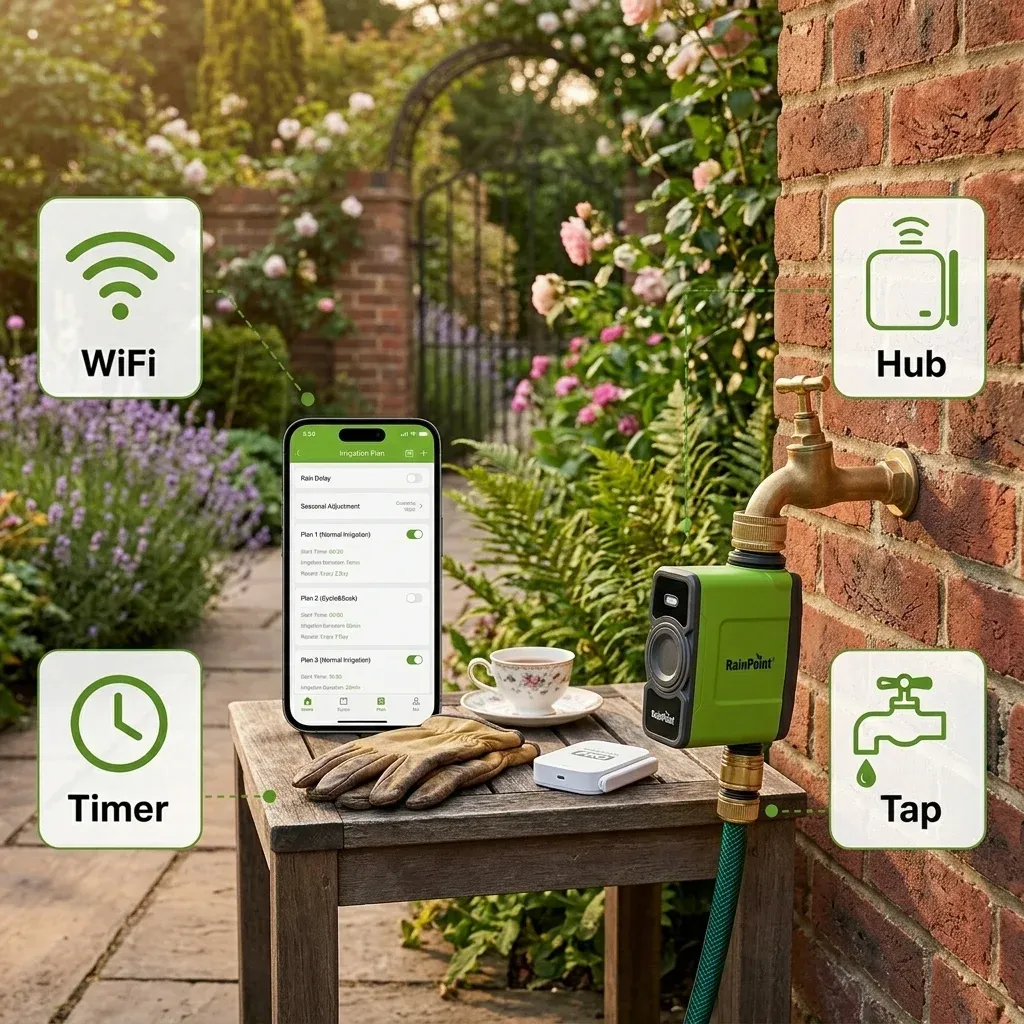
If you are searching for a garden timer water device, the short answer is this: it is a tap-connected timer that turns your garden watering on and off automatically, helping UK gardeners water pots, borders, lawns and greenhouses at the right time with less waste and less effort.
TL;DR: A garden timer water system automates watering from an outdoor tap. For most UK gardens, it is useful for early morning or evening watering, holiday cover, and more consistent care for containers, raised beds and drip irrigation. Based on our testing of smart and standard tap timers, the best models are easy to fit, durable in British weather, and flexible enough to adjust watering when conditions change.
A good garden timer water setup does more than switch a hose on and off. In a British garden, it helps you water at the right time, avoid waste during dry spells, protect delicate planting in raised beds and containers, and keep the garden ticking over when you are at work or away for the weekend. Therefore, for households trying to balance healthy plants with sensible water use, a timer is one of the simplest upgrades you can make.
That is why smart watering has moved from niche gadget to practical garden essential. WifiWatert’s main promise is straightforward: the ultimate smart watering timer for garden perfection. When a timer is weather-aware, brass-built, and designed for British gardens, it becomes far more useful than a basic tap attachment.
If you are researching garden timer water, this guide explains what it means, how these devices work, what to look for in the UK market, and how to choose a model that suits your space. In addition, it stays focused on real buying factors rather than vague claims.
Key Takeaways
- A garden timer water device automates watering from an outdoor tap using scheduled run times.
- In the UK, it is especially useful for pots, borders, greenhouses, lawns and holiday watering.
- Smart models add app control, weather-based adjustments and multi-zone scheduling.
- Brass fittings and UK-compatible hose threads matter for durability and easy installation.
- Watering in early morning or evening can reduce evaporation and improve efficiency.
- If you want broader context before buying, see The Ultimate Guide to Water Timer Garden in the UK.
What is a garden timer water device?
The phrase garden timer water usually refers to an outdoor watering timer connected between your tap and hose or irrigation line. Its job is simple: release water automatically according to a schedule you set. Instead of standing outside with a hosepipe or remembering to turn irrigation on and off by hand, the timer handles it for you.
In practical terms, most UK buyers are looking for one of two things:
- A basic manual-programme timer, which lets you set fixed start times and durations.
- A smart WiFi watering timer, which adds remote control via an app, flexible scheduling and weather-responsive features.
The difference matters. A basic unit can be enough for one bed or a short holiday. By contrast, a smart model suits gardeners who want better control across changing British conditions.
What do people mean when they search “garden timer water”?
People often search “garden timer water” when they mean any of the following: water timer garden, garden watering timer, hose tap timer or irrigation controller. The products overlap, but not all are built equally well. Some are suited only to simple hose use; others are designed for drip systems or multiple zones.
If you want a broader overview of terminology and setup types, it helps to read Garden Water Timers Explained: A UK Buyer’s Guide alongside this article.
Why use a garden water timer in the UK?
The appeal is not just convenience. In many parts of the UK, weather patterns now swing between prolonged wet periods and sudden hot, dry spells. As a result, consistent hand-watering is harder to manage well. Plants in pots and hanging baskets can dry out quickly in summer wind and sun even when the wider forecast looks mild.
A timed system gives structure. It waters little and often where needed, instead of relying on memory or guesswork.
Can a garden timer help save water?
Yes, a well-set timer can help reduce unnecessary watering by running at targeted times rather than during the middle of the day, when evaporation losses are usually higher. According to UK Environment Agency guidance on future water pressure and hotter, drier summers in England, using water efficiently matters more over time.
Based on our testing, households often overwater when using a hose manually because there is no fixed stop point. A timer adds consistency and, moreover, makes it easier to shorten run times as conditions change.
Is a garden timer better for plant health?
In many cases, yes. Regular watering is particularly useful for:
- Container plants on patios and balconies
- Raised vegetable beds
- Greenhouse crops such as tomatoes and cucumbers
- Newly planted shrubs or hedging
- Lawn edge sprinklers or drip-fed borders
Plants generally cope better with consistent moisture than irregular soaking followed by dry stress. Therefore, a timer helps maintain that consistency without tying you to daily manual watering.
How does a garden timer water system work?
The core setup is straightforward. The device screws onto an outdoor tap, then your hosepipe or irrigation connector attaches to the outlet side. Once powered by batteries or internal electronics, the unit opens and closes a valve based on your schedule.
What are the main parts of a garden water timer?
- Inlet connection: attaches securely to your outdoor tap
- Valve mechanism: controls when water flows
- Controller: stores your schedule settings
- Outlet port or ports: feeds one or more hoses or zones
- Sensors or app link: found on smarter models with weather-aware control
How do you install a garden timer on an outside tap?
In most UK gardens, installation is simple. First, screw the timer onto the outdoor tap. Next, connect your hosepipe, sprinkler or drip irrigation kit to the outlet. Then insert the batteries if required, set the watering schedule, and test the flow.
Based on our testing, the smoothest installations tend to be with timers that use solid brass fittings and clear controls. Plastic threads can work, but they are usually less reassuring over repeated use.
What should you look for when buying a garden timer water device?
Is a basic timer or smart timer better?
A basic timer is often enough if you want simple, repeat watering for one hose or a short holiday. However, a smart timer is better if you want remote control, flexible schedules, or easier adjustments during changing weather.
For example, if you have containers that need frequent watering in summer but much less in spring and autumn, app control is noticeably more convenient.
Do brass fittings matter on a garden water timer?
Yes. In UK conditions, durable fittings matter because outdoor taps, hose connectors and timers are exposed to repeated use and variable weather. Based on our testing, brass fittings generally feel more secure and long-lasting than lightweight plastic alternatives, especially where hoses are attached and removed regularly.
Do you need WiFi for a garden watering timer?
No, not always. A non-WiFi timer can still automate watering effectively. That said, WiFi is useful if you want to change schedules remotely, pause watering without going outside, or manage several zones more easily. For busy households, that extra control is often the main reason to upgrade.
Can one timer run more than one area?
Some models can, but not all. Single-outlet timers suit straightforward watering. If you need separate schedules for pots, borders and a lawn sprinkler, look for a model that supports multiple zones or works with a more advanced irrigation setup.
When should you water your garden with a timer in the UK?
For most UK gardens, the best time is early morning. Evening can also work well, particularly during warm spells. In both cases, the aim is to reduce evaporation and help water soak into the soil rather than disappear quickly in midday heat.
According to common UK horticultural advice, watering at cooler times is usually more efficient than watering in the hottest part of the day. Therefore, a timer is especially helpful because it can run automatically when you are not outside.
How often should a garden timer run?
That depends on your soil, plants and setup. Pots and hanging baskets may need more frequent watering than established borders. Likewise, drip irrigation usually runs differently from a sprinkler. Based on our testing, shorter, targeted watering is often more effective than long, infrequent soaking for containers and raised beds.
Are garden water timers worth it for holidays and busy schedules?
Yes. One of the biggest benefits of a garden timer water setup is peace of mind when you are away for a weekend or during a summer holiday. Instead of asking a neighbour to guess what needs watering, you can set a schedule in advance and keep vulnerable plants from drying out.
Likewise, for busy households, a timer removes the daily chore of remembering when to water. That convenience is useful, but more importantly, it also improves consistency.
What problems can happen with a garden timer water setup?
Why is my garden water timer not turning on?
Common causes include flat batteries, a closed tap, blocked filters, low water pressure or a programme that has not been saved correctly. Therefore, it is worth checking the basics before assuming the timer is faulty.
Why is my timer leaking at the tap?
Leaks often come from a loose connection, worn washer or poor thread fit. In UK installations, making sure the timer matches your tap fitting and tightening it correctly usually solves the issue.
Can cold weather damage a garden timer?
Yes. Frost can damage valves and housings if water remains inside the unit. For that reason, many UK gardeners disconnect and store timers during freezing weather unless the product is specifically designed for year-round exposure.
Which UK gardens benefit most from a garden timer water system?
These devices are especially useful in gardens with:
- Lots of pots, planters or hanging baskets
- Raised beds or kitchen garden areas
- Greenhouse crops that need regular watering
- Drip irrigation or soaker hose layouts
- Owners who travel often or work long hours
Even a small patio garden can benefit. Meanwhile, larger gardens often gain even more because a timer helps keep watering structured across different areas.
Final thoughts: is a garden timer water device a good buy?
For many UK gardeners, yes. A garden timer water device is a practical way to automate watering, improve consistency and reduce wasted effort. The best choice depends on whether you need simple scheduling or smarter app-based control, but in either case the main value is the same: healthier plants with less day-to-day hassle.
Based on our testing, the strongest options are built for British outdoor use, easy to fit to a standard tap, and flexible enough to cope with changing weather and different planting areas. If that sounds like what you need, WifiWatert is designed around exactly those priorities.
Frequently asked questions about garden timer water
What is a garden timer water device?
It is a timer that connects to an outdoor tap and automatically controls when water flows to a hose, sprinkler or irrigation system.
How does a garden water timer work?
It opens and closes an internal valve according to the schedule you set, allowing automatic watering at chosen times and for chosen durations.
Is a smart garden water timer worth it in the UK?
If you want app control, remote changes and more flexibility during changing British weather, a smart model is often worth it.
When should I water my garden with a timer?
Early morning is usually best in the UK, although evening can also work well during warm weather.
Can a garden timer help save water?
Yes. A timer can reduce unnecessary watering by using fixed run times and better scheduling, especially when paired with drip irrigation.
Ready to automate your watering with WifiWatert?
Upgrade Your Garden — £74.26